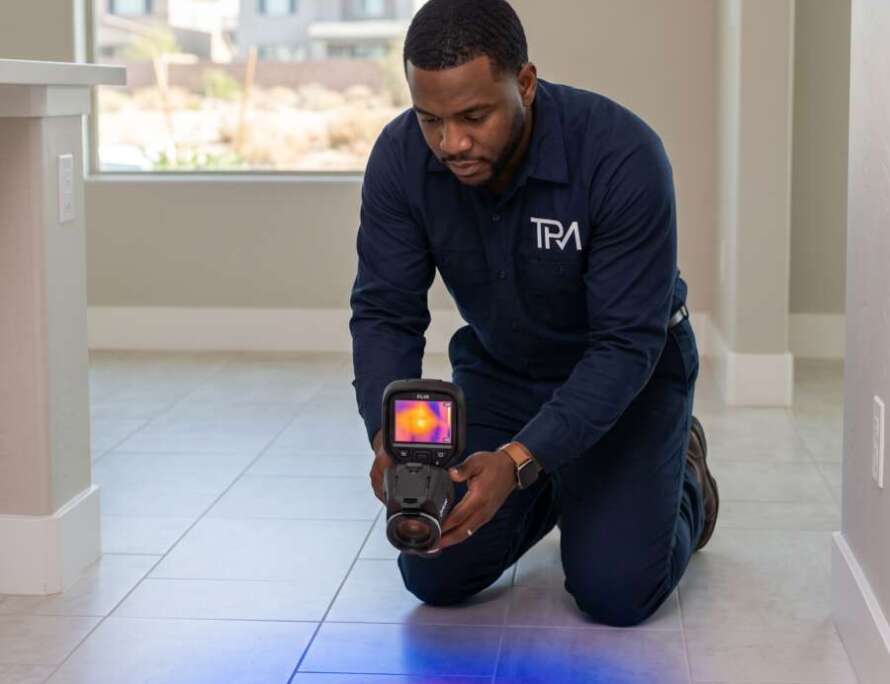
A slab leak is a leak in a water line that runs under or through your home’s concrete foundation. Most Las Vegas homes are built on slabs, and our hard water and shifting desert soil are tough on buried copper pipe, so slab leaks are one of the most common big repairs we see. The first question most homeowners ask is what it will cost. The honest answer is that it depends on a handful of things, and once you know what they are, the estimate makes a lot more sense.
1. How the leak is found
Before anyone can fix a slab leak, it has to be pinpointed. Good leak detection uses acoustic listening equipment, pressure testing and a thermal camera to find the spot without tearing up floors to look for it. Paying for accurate detection almost always saves money, because it keeps the repair small. Learn how we find hidden leaks.
2. Hot line or cold line
Hot water lines leak more often because heat makes the pipe expand and contract. A hot-side leak also tends to show up as warm spots on the floor and a water heater that runs more than it should. Which line is leaking can change the best way to fix it.
3. Where the leak is
A leak under a closet or a garage floor is a very different job from one under a kitchen island or a tiled shower. Location decides how much floor has to come up, how much has to be put back, and whether a reroute makes more sense than opening the slab at all.
4. The repair method
- Spot repair. We open the floor and slab right at the leak, fix that section of pipe and close it back up. Good for a single leak in pipe that is otherwise in good shape.
- Reroute. We abandon the leaking line under the slab and run a new one through the walls or attic. No jackhammering, and the new line is easy to reach later. This is often the better choice when the leak is under an expensive floor.
- Repipe. If the home has had more than one slab leak, or the copper is thin and pitted, replacing the water lines is usually the smarter long-term fix. More about repiping.
5. Flooring and finish work
Carpet can often be pulled back and relaid. Tile, stone and hardwood are harder to match and replace. Drywall patching and paint after a reroute are part of the picture too, so ask what is included in any estimate.
6. Water damage
A leak that has been running for weeks can soak flooring, baseboards and drywall. Drying out and repairing that damage is separate from the plumbing repair, which is one more reason to act quickly when you first notice the signs. Slab leak warning signs.
7. Insurance
Many homeowner policies help with the cost of getting to the leak and repairing the damage it caused, even when they do not pay for the pipe itself. Every policy is different, so call your insurer early and keep photos, the leak detection report and your plumber’s invoice.
How to keep a slab leak repair affordable
- Call as soon as you notice a jump in your water bill, a warm spot on the floor, or the sound of running water when everything is off.
- Shut off the water at the main if you see water coming up through the floor. How to find your main shutoff.
- Ask for the options side by side: spot repair, reroute and repipe, with the pros and cons of each for your home.
- Get the estimate in writing before work starts.
Think you have a slab leak?
TPM Services is a family-owned, licensed Las Vegas plumber (NV License #0078472). We find the leak, walk you through your options and fix it right. Call 702-932-5755, answered 24/7. More about slab leak repair.