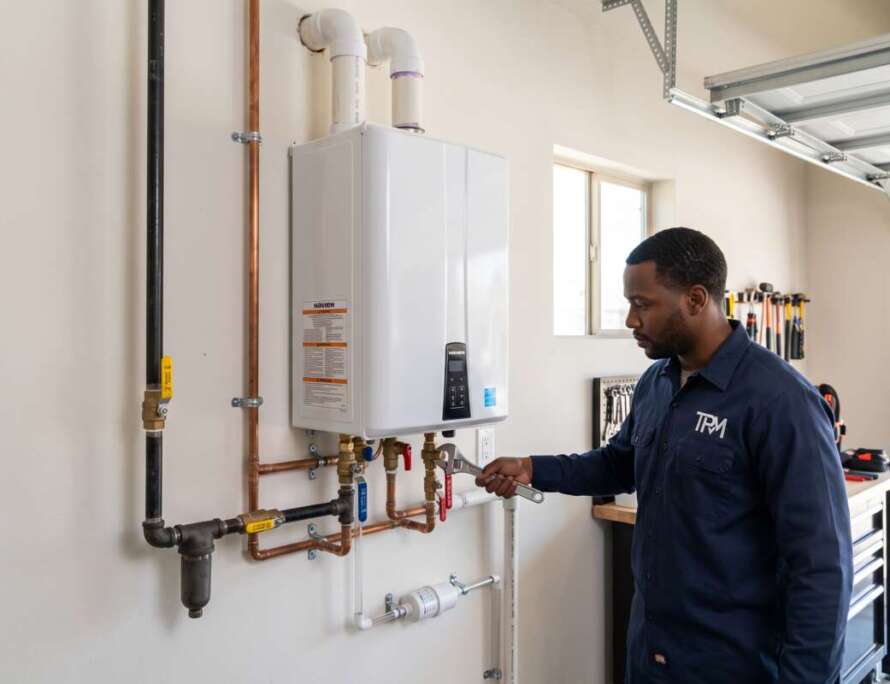
Finding water around your water heater is stressful, but a few quick steps can protect your home and keep a small leak from becoming a big one. Here’s what to do, in order.
First: safety
If you smell gas, leave the house now and call Southwest Gas from outside. Don’t touch light switches or appliances. Come back to the water heater only after the gas company says it’s safe.
Step 1: Turn off the power or gas
- Gas water heater: turn the gas control knob on the heater to Off, or close the gas valve on the supply line so the handle sits across the pipe.
- Electric water heater: switch off the heater’s breaker at your electrical panel. Don’t touch the heater or the panel if you’re standing in water.
Step 2: Shut off the water to the heater
Find the cold water line going into the top of the heater and turn its valve off. If that valve won’t turn or keeps leaking, shut off the main water valve to the house. Here’s how to find your main shutoff.
Step 3: Find where the water is coming from
The relief valve or its drain pipe
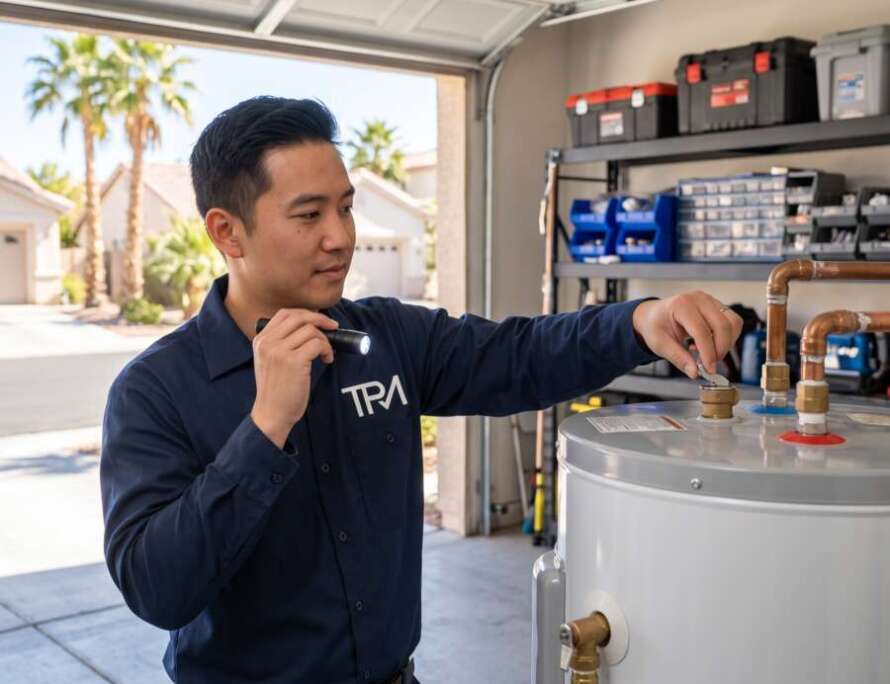
The temperature and pressure relief valve is a safety device on the side or top of the tank with a pipe running down toward the floor or outside. If water is coming from that pipe, the valve may be doing its job because pressure or temperature is too high, or the valve itself may be worn out. High house pressure and a missing or failed expansion tank are common causes in Las Vegas. Learn about pressure and expansion tank service.
The connections on top
Leaks at the water connections or the shutoff valve above the heater are often repairable by replacing a connector or valve.
The drain valve near the bottom
A drain valve that drips can usually be tightened or replaced.
The tank itself
If water is coming from under the heater or through the bottom of the jacket, and it isn’t running down from a fitting above, the tank has likely rusted through. A leaking tank can’t be repaired and the heater needs to be replaced. Las Vegas hard water wears tanks out faster. Read why water heaters fail early here.
Step 4: Protect the area
Mop up the water, move boxes and anything stored nearby, and take photos for your records. If the heater is in a closet or on an upper floor, check the ceiling and walls around it for water.
Repair or replace?
Leaking fittings, valves and connectors can usually be repaired. A leaking tank, or a heater that’s older and has other problems like rumbling, rusty water or not enough hot water, is usually a replacement. We’ll tell you honestly which one you need and give you a written estimate before we start. We install tank and tankless water heaters. Learn more about water heater repair and replacement.
Need help now?
Call TPM Services at 702-932-5755. Our phone is answered 24/7. More about our 24/7 emergency plumbing.